

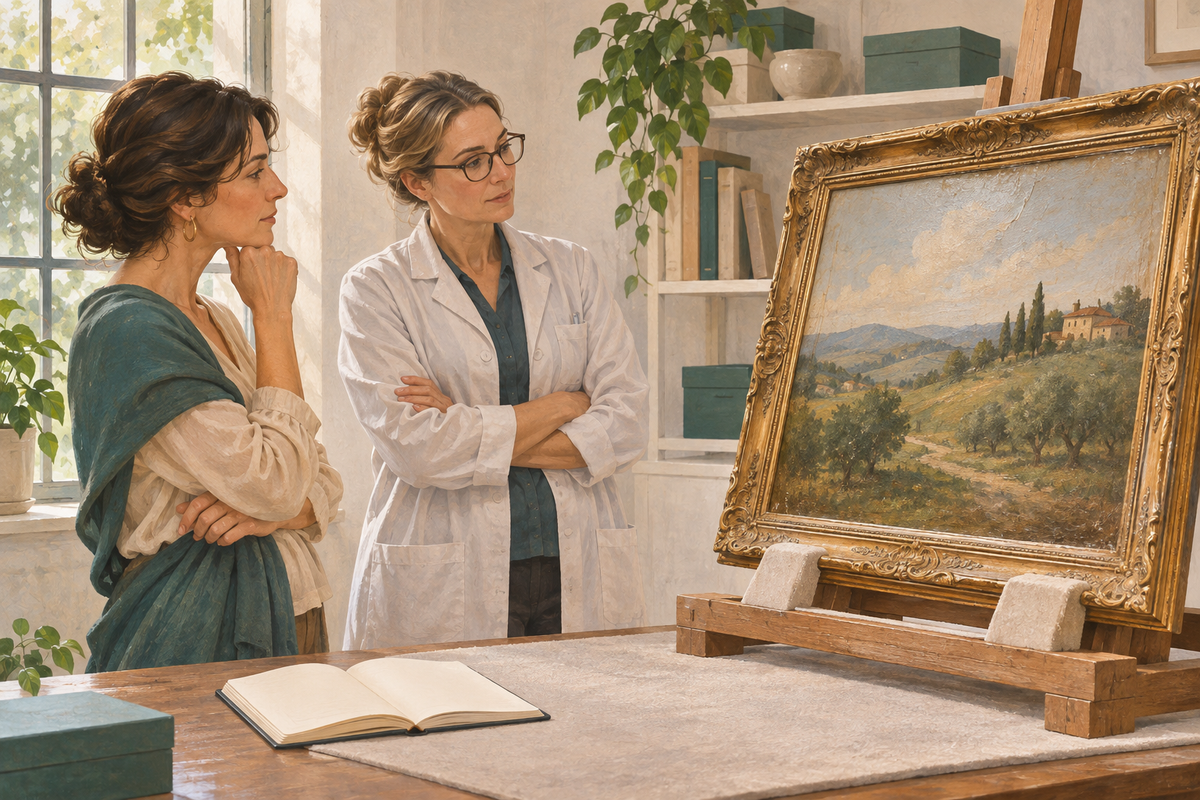
A painting looks dark, has a small stain, or shows some signs of age: before offering it for sale, it is natural to think of “fixing it.” However, the decision deserves a preliminary step. Cleaning, assessing the state of preservation, and determining market value address different questions.
For the owner, the first goal is to understand what the artwork really needs before authorizing any treatment. Here is how to approach discussions with conservation professionals and those who will handle the possible sale.
A dark surface does not indicate what to do on its own
The Canadian Conservation Institute explains that an image may be less legible due to surface deposits or the alteration of the varnish. Distinguishing between these situations requires knowledge of the materials: the visual result alone does not suggest a suitable product.
Avoid testing water, detergents, alcohol, solvents, or commercial products to “revive” the colors. Even rubbing a stain or dusting the paint can remove fragments that are already poorly adhered. A test in a hidden corner does not prove that the treatment is safe for the entire painting.
The same caution applies to recent works: a contemporary painting is not automatically more resistant. When cleaning is necessary, it should be entrusted to a restorer with experience in the materials used in the artwork.
Distinguish an aesthetic need from a conservation problem
A torn canvas, a surface with flaking paint, or an unstable structure require a different approach than the desire to make the painting brighter. The CCI’s painting care guidelines recommend consulting a professional for damage and deterioration; a tear, in particular, should not be left without an assessment.
If you notice a problem, report what you see and ask for guidance even before moving the artwork. While waiting, avoid repeated handling, pressure on the canvas, direct sunlight, and proximity to heat sources. Do not remove the frame to improve the presentation: it may help protect the painting and may have its own value.
Document the condition before any treatment
The condition report records the state of the artwork and the frame at a given time, with descriptions and images. It is also used to track changes and prepare any treatments. Photographs are not enough for a professional examination, but they do provide useful documentation.
As the owner, you can note when you first noticed a stain, tear, or change, without attributing a definite cause. Keep dated photographs and reports of any previous restorations. If treatment is carried out, ask that the initial documentation, the proposal, and the final report remain associated with the artwork.
To prepare the images for your request, you can consult our photography guide for an initial assessment, showing the defects without retouching them digitally.
What questions to ask before accepting a quote
Bring concrete questions to the discussion: Is the treatment intended to stabilize damage or improve the legibility of the image? What does the quote include? What further information is needed before deciding? What documentation will you receive? How should the painting be handled?
Keep conservation needs separate from financial expectations. Do not consider the cost of restoration as a guaranteed increase in price: before authorizing it, compare the objectives, costs, and sales process. There is no universal percentage that can be added to the value of the artwork after treatment.
Where to start with VendereQuadri
If you are thinking of selling, you can send photographs and information about the artwork’s current condition. VendereQuadri considers the state of preservation along with the artist, documentation, provenance, and market evidence. The initial assessment and preliminary consultation are free and without obligation; any subsequent paid services are agreed in advance.
Request an initial assessment of your artwork and report any visible problems and known treatments in the notes. The initial discussion helps determine which further checks are needed before making decisions about the sale.
Sources consulted on November 3, 2026: Canadian Conservation Institute, Notes 10/1 and 10/6 and “Basic care – Paintings”; VendereQuadri service page linked above. Illustrative cover generated with AI: the people and painting depicted are imaginary.


