

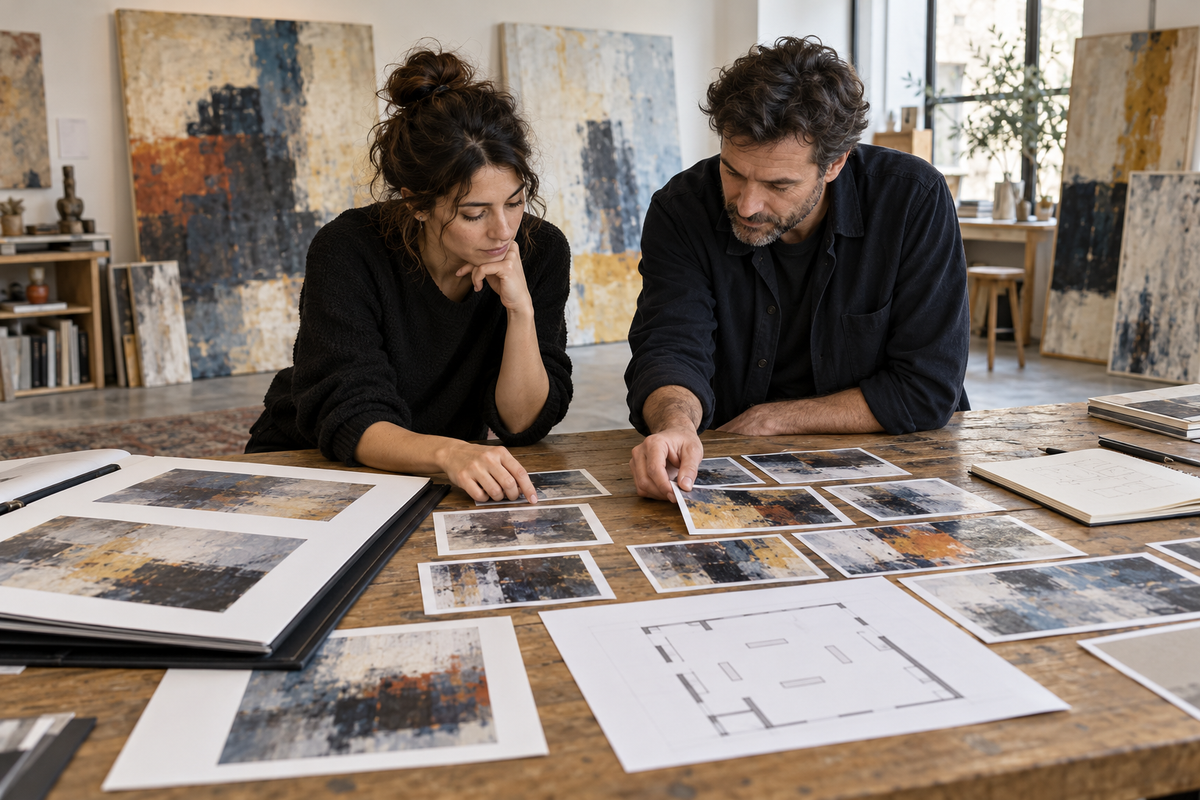
Do you have a series of works and would like to propose them for an exhibition? Before sending a complete portfolio, prepare a dedicated dossier: a document that allows the reader to understand the idea, see the relevant works, and assess what would be needed to exhibit them.
There is no single format that works for every venue. A call for submissions, a gallery, and an independent space may request different materials. This guide is intended to help organize your work; the recipient's instructions always take precedence.
Start with the venue and its requirements
Read how the space receives proposals: does it accept unsolicited applications? Does it require a form? Does it specify a limit on the number of images, pages, or file sizes? Also note the deadline and the correct contact details. Sending a very large attachment to a general email address can make it difficult for the proposal to be reviewed.
Look at the venue's activities and ask yourself why your project might be relevant. If you do not know the space's dimensions, access points, or facilities, note what information you are missing. Do not plan an installation by presenting walls or equipment as available if no one has confirmed them.
Explain a project in concrete terms
Open with a working title and a brief description: what question brings the works together? What would the visitor see? Why should these works be presented together right now? The text should help the reader understand the selection without replacing it with a succession of adjectives.
You can use a sample structure: “The project brings together a series dedicated to..., developed through...; the exhibition route relates...”. Complete it only with elements observable in your work. If some works are yet to be created, distinguish the future project from the works that already exist.
Choose the works and make them identifiable
Prepare a selection consistent with the proposal, respecting the required number. Assign a simple reference to each image and link it to a sheet with the title, year, technique, support, and dimensions. Specify when the dimensions include the frame and note if a work will not be available on the proposed dates.
Check that the photographs and captions match. An environmental view can help convey the scale, but it should be distinguished from the front-on photograph and any digital montage. For videos or sound works, indicate the duration and viewing method; for an installation, describe the necessary elements.
Make the feasibility visible
Add an operational page detailing preparation times, the artist's availability, and installation requirements. If you propose a layout in the space, call it a “proposal” until it has been agreed. Highlight any requirements for power supply, projection, supports, or technical assistance, without assuming they are included.
The ArtsQuest exhibition guidelines provide a concrete example of how a venue may assess the idea, images, installation, and compatibility with the space together. However, the requirements of a single organization do not become universal rules, nor do they indicate that applications are currently open.
Prepare costs and responsibilities to be clarified
A compelling project must also be able to be discussed in practical terms. List production, packaging, shipping, installation, any equipment, documentation, and fees. Next to each figure, indicate whether it comes from a quote, a cost already incurred, or an estimate to be verified.
In a separate column, note which resources are confirmed and which are still to be secured. The Project budgets guide by Artquest suggests distinguishing income, expenses, and unconfirmed funding. Do not consider any future sales as money already available to produce the exhibition.
Close the dossier with the essential materials
Include up-to-date contact details, a brief biography, and a relevant CV with verifiable dates and venues. For a specific application, avoid including every experience: select those that help explain the project. Keep a folder with the original documents and images so you can respond to subsequent requests without starting from scratch.
Before sending, have someone who does not know the series read the dossier. Can they explain the idea and identify the works? If a step is missing, clarify it. An organized proposal makes it easier to review, but does not guarantee selection, representation, or sales.
A review of your approach
If you want to improve the presentation of your work, you can start with the curatorial advice for artists by VendereQuadri. Bring the selection, the current texts, and any request received from the venue: these will help define the objectives and relevant support. Activities, paid services, and conditions are agreed before starting.
Sources consulted on October 27, 2026: ArtsQuest, Exhibition Proposal Submissions; Artquest, Project budgets and Fundraising basics; VendereQuadri curatorial service. Illustrative cover generated with AI: the people, works, and exhibition project are imaginary.


