

Blog

“From Vienna to Rome. The Wonders of the Habsburgs from the Kunsthistorisches Museum” at the Museo del Corso
The exhibition, curated by Cecilia Bischoff, is not merely a parade of masterpieces, but an exploration of collecting as a political and diplomatic tool. The route reconstructs how the Habsburgs built their imperial image through patronage, transforming the Kunsthistorisches Museum into an archive of European knowledge. In the first room, Sissi and Franz welcome us in the form of their double portrait. It was they who finalized the construction of today's Museum, calling upon the most important artists of the era, including Klimt. The first room, in fact, not only shows on an interactive map the movements of the greatest artists present in the collection, but also presents the precise architectural links that unite Palazzo Cipolla with the Viennese palace, explaining its history also through video installations in which its architects "come back to life": Gottfried Semper, Carl Hasenauer, and Antonio Cipolla. After the introduction, the route is divided into different geographical contexts that invite us to discover the court artists of various countries and the characteristics that unite them. To fully enjoy the visit, one must leave behind the concept of a thematic or chronological exhibition: each section presents diverse objects, but every single piece is an absolute masterpiece. A short route that can be considered almost a buffet of excellence, among which it is difficult to choose. Already the first section presents works by Van Dyck, Rubens, Pourbus, and Brueghel the Younger. We move through myths, allegories, portraits, genre scenes, and still lifes. Many precious fragments, each admirable in its own way, which allow us to understand the vastness of Flemish subjects: from the absolute precision in the rendering of lenticular detail to the fast and liquid brushstroke that unravels, moving the soul of the image. We continue with a miniature Wunderkammer, which displays a rotten apple in marble and a small head that alludes to human decay, with half the face youthful and the other reduced to a skull and consumed by snakes. There are luxurious cups made with Nautilus shells and semi-precious stones, objects that at the time were displayed at banquets as symbols of wealth and power and that today are increasingly unknown.The Dutch section ranges from the precursors of genre scenes, such as Pieter Aertsen, to authors like Frans Hals, characterized by a loose, yet sober and striking portraiture. The German section, on the other hand, presents works by Cranach — including one of the many versions of Adam and Eve — and “hyperrealistic” works that include not only still lifes, but also one of the most famous trompe l’oeil by Sebastian Stoskopfs: a canvas that seems to hold the engraving of a Galatea. It is said that, when the work was first presented, the emperor tried to grab the paper before realizing the deception and bursting out laughing. The final sections are once again a race through masterpieces: we are talking about works by Arcimboldo, Velázquez, Veronese, Tintoretto, Moroni, and the works that perhaps struck me the most, such as the Death of Cleopatra by Guido Cagnacci and the Rest during the Flight into Egypt by Orazio Gentileschi.The conceptual core of the exhibition, finally, is Caravaggio's Crowning with Thorns , to which an entire room is dedicated. The soft and pale face of Christ, resigned but strong, stands out among the figures surrounding him: the executioners with sun-worn skin, strong hands, and dirty nails. It is a lesson on the raw analysis of reality, the forceful entry of the everyday into sacred art that will mark painting forever. It is difficult to give a single judgment on this exhibition, which ranges through themes, nations, and courts. It is a route that tells the best that the era had to offer, trying to untangle the reasons why precisely these genres and these artists had so much luck at the main courts of the continent. Each work on its own is a masterpiece; there are no fluctuations in quality. In "bits and pieces" we are introduced to what fueled the imperial reputation: princely gifts and coveted painters, constantly traveling to satisfy the most important collectors. It is certainly a unique opportunity to admire these excellences without taking a flight to Vienna, but perhaps it is also the ideal stimulus to pack your bags and discover what other wonders the Viennese museum has to offer.

The female body in art
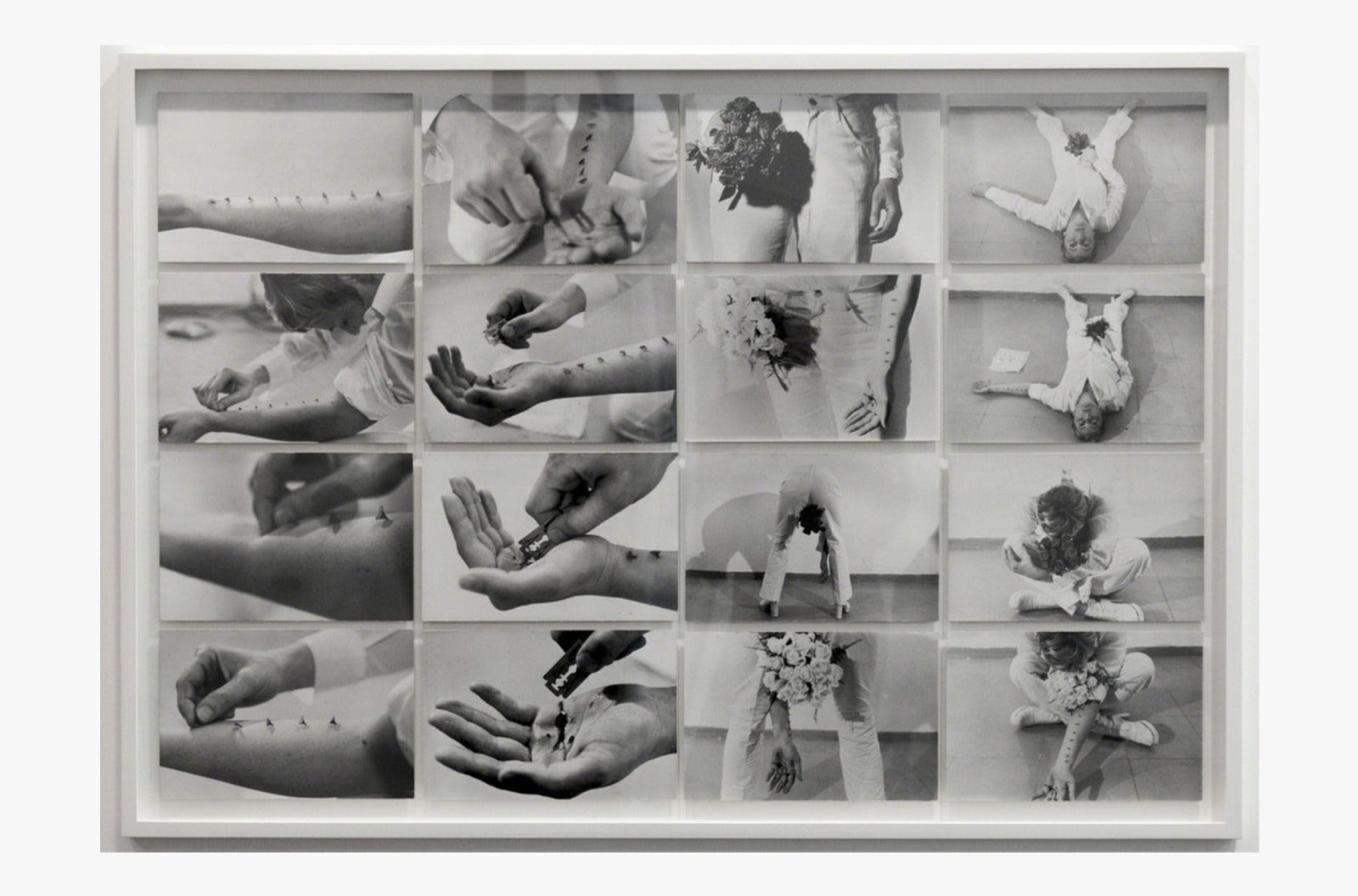
In Western art, the narrative of the female body has long remained dominated by men, and furthermore, its representation is rare and marginalized in older art. It's no coincidence that when Artificial Intelligence is asked to create a portrait based on the canons of modern art, the result is a white, middle-class man, the fruit of the selection and subsequent elaboration of as many as fifteen thousand portraits created between the fourteenth and twentieth centuries. This is what has been codified for years in the art world. The female body was initially relegated almost exclusively to sacred figures and devotees; later, mythology and noble portraits were added. Only in the nineteenth century did the female body no longer require narrative justification for its representation, but instead became a fully-fledged artistic repertoire on a grand scale, decontextualized from sacred or profane narrative and embraced as a subject in its own right. As recently as 1989, the art collective Guerrilla Girls (note that the feminine version of the term does not exist) asked: "Do women have to be naked to enter the Met Museum? Less than 4% of the artists in the modern art section are women, yet 76% of the nudes are female." This article, however brief, aims to provide a brief glimpse into the female body in art, especially in the last century. We will browse, in the form of slides, some of its most dramatic interpretations, because a more comprehensive analysis would require a book. However, we will look at some iconic moments that codified a new vision of women and ushered in new freedoms, making women part of the discussion, exposing themselves directly to interrogate political and social issues. Probably the painting that most opens the world to a new vision of the female body is Gustave Courbet's The Origin of the World. With an almost photographic realism, it depicts a female vulva in close-up and from a foreshortened angle. The allegory is supported by the title: it is therefore not an erotic painting, but a factual reality narrated in a raw manner, leaving room for the power of the body to generate life, in a hymn to fertility, life, and even sex. Previously, to paint a female nude, a pretext was needed; only later does it become a concrete body, immersed in the reality of everyday life. One of the first women of the twentieth century to use her own body as a model, not for social affirmation but to atone for her physical and mental pain, was Frida Kahlo. After the accident in which she was impaled by a pole, she spent long periods confined to bed in a corset. Her imagination was not only transferred to canvas, in her dreamlike bodies and disturbing visions, but she also painted the corset itself, attempting to atone for her pain with the power of color. A decisive turning point came with performance art, arguably the greatest turning point. Artists like Valie Export, Gina Pane, and Marina Abramović didn't create works depicting bodies; rather, the body itself became a canvas, a form of expression, communication, and scandal. Valie Export, with works such as Tap and Touch Cinema (1968), brings reflections into the realm of desire and the gaze. Wearing a box that leaves her breasts exposed, she invites passersby to touch, reversing the traditional dynamics of cinema and vision. The body is no longer a distant, two-dimensional image, but a presence capable of responding and destabilizing. Export denounces media objectification and restores control of her own exposure to women. In 1974, in Rhythm 0, Abramović offers herself to the audience as a passive object, providing seventy-two tools, including a loaded pistol. The experiment reveals how quickly the gaze can turn violent when the female body is perceived as available. The artist does not represent vulnerability: she lives it, exposes it, forcing the viewer to confront their own responsibility. Years later, in The Artist Is Present, the still and silent body instead becomes a space of connection, emotional intensity, and resistance, especially in the encounter with Ulay, who had long been her companion in life and art. Through actions like Azione sentimentale, Gina Pane uses cuts and wounds as symbolic tools. Her performances, often characterized by small acts of controlled self-harm, are not gestures to spectacularize pain, but rather attempts to make collective suffering visible. Blood becomes a sign, the body a political surface. Pane removes the wound from the private sphere and places it in the public realm, transforming sacrifice into language. These practices pave the way for many contemporary artists. Consider Shirin Neshat, who, through photography and video art, addresses issues related to female identity in the Islamic context, political repression, and war. Often, her own face becomes the spokesperson for writing and resistance. The body becomes a narrative surface, an archive of memory, and a means of protest. Female artists no longer demand inclusion in a pre-existing narrative, but construct a new one, bringing their physical presence into play. The transition from idealization to concreteness is not merely aesthetic, but much more. The female body becomes autonomous, a depicted subject or a means of communication; a woman's reclamation of her own body and its perception. She takes possession of her own space, seeking to free herself from a narrative to which she has been subjugated for too long, to finally find her own voice.

Artwork storage: what it is, when you need it, and why it is essential
If you own a work by an artist with an Archive or Foundation, you may have wondered whether it needs to be archived before being sold. In most cases, the answer is yes. Archiving is not only a verification of the work's authenticity, but also a fundamental tool for its protection, enhancement, and marketability. In this guide, we explore what an artist's Archive is, when archiving is necessary, and what the legal and market implications are.

Antonio Pedretti: The "Bianco Lombardo" finds a home in Villa Borghi
“One cannot help but be struck by the confidence with which your sign, your notes of colour define a landscape, a figure, a whole in its essential features", these are the words with which Renato Guttuso described the youthful work of Antonio Pedretti, an artist who His fame has now been consolidated over a career spanning over fifty years. To honor his constant commitment, the Collection was inaugurated at Villa Borghi in Biandronno Permanente del Bianco Lombardo: a unique event that dedicates an exhibition space to it stable.

Van Gogh and the construction of genius: narration as the final brushstroke of the work.
Van Gogh's genius was already on the canvas, but the world didn't see it. Only thanks to those who told and shared his work, the genius became visible. When talent and storytelling meet, a legend is born.

Egon Schiele - Portrait of an Artist
"I paint the light that emanates from all bodies. Even erotic artwork has its own sacredness! I will go so far that one will be awed by the grandeur of each of my 'living' works." These are the words of Egon Schiele, written in a letter to Leopold Czihaczek on September 1, 1911. Schiele, today, can be considered an iconic artist, known worldwide as a leading exponent of early Viennese Expressionism. His drawing was revolutionary: synthetic, angular, and possessed a dramatic intensity perhaps never seen before. He chose taboo subjects, as Rodin had done years earlier, but with a different intention. With Schiele, the use of space changed: a new juxtaposition between figure and background began, a decentralization of the subject, a reversal of full and empty space. His linework can at times appear almost caricatural, with its anatomical extremes, and he addresses themes of carnality that, though existing before, had rarely been so central to a painter's artistic work. Rivers of ink have been spilled on his life, analyzing his works, his existence, and the difficulties he faced. Books and films have mystified the artist, often focusing on specific moments in his career, other times deliberately omitting them, always striving to create an image that fits the chosen narrative. It's one thing to read interpretations and analyses of his works, another to listen to him firsthand. Born in 1890 and died in 1918, Schiele's life was short and intense, and the volume Portrait of an Artist allows us to accompany him for a while and discover his life through his eyes. It's not a biography, but a volume that includes the artist's letters, his poems, and his Neulengbach diary. In his letters, he recounts his relationship with his family, the early loss of his father, his bond with his sister, his difficult relationship with the Academy, but also the friendships he formed with artists and collectors. In the texts he wrote in Neulengbach, we can read about one of the most turbulent moments of his life: the artist was accused of showing erotic drawings to minors, facing charges of kidnapping and violence; in the texts written in prison he presents his point of view on what happened. Schiele could never truly feel at peace: he also experienced the outbreak of war and the fears of military service. His life remained tormented until the end: in 1918, his wife, six months pregnant, contracted the Spanish flu, and the couple died three days apart. We see how, despite the difficulties, the artist continued to believe in himself and his art, convinced that his works would one day be exhibited in the temples of art and that even a single "living" work of art was enough to ensure his immortality. Even on his deathbed, he declared that his paintings should be exhibited in every museum in the world. It is fascinating to be able to draw on the artist's firsthand accounts and bring him from a mystical aura to a real-life context, making him "human." Economic issues and the precariousness of the artistic profession, family and social relationships, the confrontation with popular customs and traditions, and even love become central themes, in a context that remains extraordinarily relevant even today. For those interested in a short and accessible read that recounts the painter's life in its key moments, we also recommend Egon Schiele. The Struggling Body . In this comic book, Otto Gabos creates illustrations that accompany the biographical narrative with extraordinary drawings that adopt the Austrian painter's style.

If Love Looks. A Sentimental Education on Cultural Heritage. - Tomaso Montanari
Reading Tomaso Montanari means accepting that cultural heritage is not a neutral topic, nor abstract knowledge. In Se amore guarda, the author intertwines art history, politics, and civic consciousness, restoring cultural heritage to its deepest essence: that of a common good, a living experience, and an instrument of freedom. A book that teaches us not only to look to the past, but to live in the present—with greater responsibility and, perhaps, more humanity.

Giovanni Segantini Exhibition - Civic Museum of Bassano del Grappa - October 25, 2025 - February 22, 2026
What is an exhibition today? The exhibition dedicated to Giovanni Segantini at the Museo Civico in Bassano del Grappa offers a clear answer: research, discussion, and understanding. A rigorous journey that spans the artist's entire career and reveals its complexity, beyond any reductive interpretation, confirming his central role in late-nineteenth-century European painting.

The “Dolce Vita” by Novella Parigini
The “Dolce Vita” by Novella Parigini Free, bold, unforgettable. Novella Parigini has transformed her life into a work of art. Dalí, Sartre, and Hollywood are merely the backdrop to a character who still defies time.

A Year in the Name of Klimt: When Art Makes More Noise Than Bitcoin (And Costs More, Too)
A Year in the Name of Klimt: When Art Makes More Noise Than Bitcoin (And Costs More, Too) Art Market 2025 · Safe Haven · Selling Paintings Blog If you thought real investment in 2025 was all about cryptocurrency, AI, and suburban housing… spoiler alert: art was once again the star of the show . And the star? Obviously, Gustav Klimt , the artist who can drive up prices more than the cost of sandwiches at the service station. At international auctions – especially in New York – the market hasn't just come alive: it's shifted gears . And it's done so with a record that reads like this: 💥 Record 2025 A Klimt work sold for $236,400,000 . Yes: two hundred and thirty-six million. No: that's not a typo. 📌 New York: capital of art (and of mind-blowing prices) The article makes one thing clear: New York confirms its position as the beating heart of the market . The major events (Sotheby's, Christie's & co.) aren't just events: they are true "money festivals." And the beauty is that it's not just the buyer who wins: the market wins too, because when art changes, everything changes : prestige, investments, collecting, narrative… and yes, even a little ego. 🎯 Not just paintings: he also wins a watch (one of those that hurt) In the midst of this wonderful chaos, here comes the twist: among the collectibles, a steel Patek Philippe appears, sold in Geneva for $17,600,000 . 📉 So is art always a “safe haven”? It depends. Because if there's one thing 2025 reminded everyone, it's this: Not everything that is art increases in value The name matters, but the history of the work also matters The market is a mix of quality, storytelling and timing In practice: Klimt flies… but the rest of the world isn't automatically "Klimt." However, this doesn't mean that emerging art has no value: it just means that strategy is needed . ✨ Pro tip Selling paintings If you want to sell well (and truly grow in the market), it's not enough to be good: you also have to position yourself . And today, positioning is the real currency. What does all this have to do with Selling Paintings? It certainly does. Because while big names are breaking records, contemporary art and emerging artists are entering a new phase: more digital, more international, more transparent. And yes: the market isn't just for the "usual suspects." But to make a work saleable and desirable, it takes: Impeccable presentation (images, work description, coherence) Correct price (neither dream nor sale) Distribution (people need to see it, not just your mom) ✅ Conclusion: Klimt is not for everyone, but it sells well. 2025 reminded us that art is still a realm where numbers make your head spin. But the real lesson is this: value is built . And those who do well, sooner or later enter the right market. 📩 Do you want to sell your works professionally? On Venderequadri you can publish your works, position yourself correctly and manage negotiations seriously (but without sacrificing style).

Lucio Fontana
LUCIO FONTANA Rosario de Santa Fe (Argentina), 1899 - Milan, 1968 The creator of Spatialism, a painter of holes, and a creator of slashes in the canvas, Lucio Fontana marked an era in the history of Italian art. Born in Argentina, he moved to Italy in 1917-1918, enlisting as a volunteer in the First World War. He decided to devote himself to art, attending courses at the Brera Academy of Fine Arts in Milan under the Symbolist Adolfo Wildt. Fontana However, he distances himself from the master's teachings and from the plastic figuration practiced by the Novecento group, to follow his own path, mixing painting and sculpture towards a new dimension: nothingness, the void beyond the canvas. It was the 1930s and his intention to act "spatially" in relation to architecture was already evident, working in collaboration with several architects of the new generation (Luigi Figini, Gino Pollini, BBPR, Luciano Baldessari). At the same time, he devoted himself to ceramics in Albisola, returning to a more figurative expression, dealing with plant and animal themes. This was followed by a so- Argentinean day, from 1940 to 1947, in which he deepens the elaboration of matter, colour, light, form and space, and writes the White Manifesto (1946). By now, "space art" was established: the "holes" appeared in 1949, and ten years later, the "cuts" arrived, perforating the canvas to create a cosmic dimension of space. These physical marks on the canvas correspond, in his spatial environments, to the insertion of neon light. The "ambient work" is the affirmation of total engagement with space, a unity between object, matter, and volume. Fontana initially created "black environments" with the application of Wood's black light (the first was created for the exhibition at the Galleria Il Naviglio in Milan in 1949). From the 1966 Biennale onward, the artist decided to use a "white" solution, total light. In 1968 For Documenta 4 in Kassel, he created Ambiente spaziale, an entirely white labyrinth that leads to a "cut" in white plaster. The same labyrinth, after Fontana's death that same year, was recreated in wood in 1974 for the Museo de Arte Contemporaneo in Caracas, to which his wife donated the original plaster panel with the cut.

Marisa Merz
A powerful yet delicate constructor, Marisa Merz continues to create, even today, intimate and visionary works that manifest a poetic time through the use of natural materials such as wax, water, salt, and clay. These primary elements place the artist in the spirit of Arte Povera, from which she later distanced herself in the 1970s, developing a personal language that combines the craftsmanship of materials like copper with the gestures of the feminine universe, such as knitting. Small, meticulously woven objects capture, in their poetry and grace, a precise balance between art and life, gestures and symbols, materials and signs. The artist's messages are delicately whispered. from works that take on a symbolic force and at the same time receive international recognition (1992, Documenta IX. Kassel; 1994, Centre Pompidou, Paris: 2001, 49th Venice Biennale). The small lead basin, Fontana (2007), isolated on a portion of the floor, is like a generator of life, an evocation of the life cycle, a phenomenological unfolding of life and forms. The water gushes forth, then changes shape to transform into ice and finally vanish with evaporation. It is the sense of natural time that is perceived and which also recalls the time of memory and the most private sensitivity, so much so that seeing in front of his work becomes more like listening.